Managing Earwax Accumulation: From Home Care to Professional Intervention
In most people, earwax naturally moves outward and eventually falls away or washes out during normal bathing. This autonomous cleaning cycle maintains aural equilibrium without requiring external assistance.
Obstructions occur when earwax gathers more rapidly than the self-cleaning process can manage. Let us investigate why accumulation happens and how to distinguish between minor issues and a professional earwax blockage.
The Biological Function of Cerumen
Earwax gets a bad rap, but it actually plays an important role in protecting your ears! This material, known clinically as cerumen, acts as a biological filter against dust, contaminants, and bacteria. It serves as a natural emollient, keeping the ear tissue hydrated and reducing the risk of inflammation.
Why Earwax Sometimes Builds Up
Various environmental factors and behaviors can hinder the natural migration of cerumen, leading to buildup. If cerumen becomes densely compacted, patients may experience auditory dullness, aural pressure, tinnitus, or vertigo.
The most common reasons for aural blockages are:
Frequent use of cotton swabs for cleaning
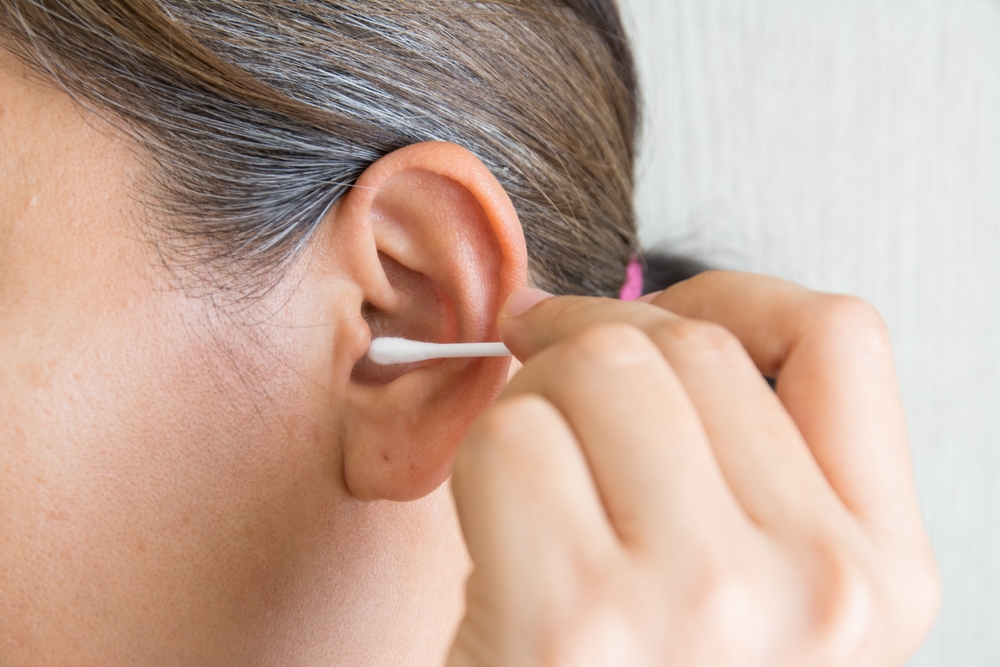
Inserting cotton swabs into the ear often pushes wax deeper into the canal instead of removing it. Repeatedly pushing the wax inward results in a chronic, symptomatic earwax blockage.
Daily use of hearing aids or audio earbuds
Prosthetics that reside in the canal act as a physical barrier to the natural outward migration of cerumen.
Individual differences in the geometry of the ear canal
Individual anatomy, such as a sharp canal bend, can trap wax and prevent natural shedding.
Hyperactive ceruminous glands
For some, the volume of earwax produced simply exceeds the capacity for natural removal.
Safe Protocols for At-Home Cerumen Management
If you suspect a slight blockage, conservative home techniques can help emulsify the wax. Recommended safe options include:
- OTC solutions containing carbamide peroxide can safely break up a blockage.
- Post-softening, a gentle lavage with a bulb syringe and tepid water can flush the canal.
- Application of dilute hydrogen peroxide can oxygenate and break up wax before drainage.
Such interventions are often sufficient to re-establish the ear’s natural migratory flow. We must emphasize that improper tools can lead to severe complications and should be avoided. Unsafe practices often result in tissue damage or secondary infections:
- Q-tips and other abrasive swabs
- Metallic implements or hairpins
- Thermal ear candles or cones
- Aggressive flushing or high-pressure irrigation
Criteria for Clinical Cerumen Extraction
In instances of severe impaction, the cerumen becomes too dense for home remedies to be effective. In these cases, professional ear cleaning by a healthcare provider is the safest option.
An ENT expert utilizes specialized otoscopes and micro-instruments to safely extract the blockage. Patients often experience immediate auditory clarity following a professional cerumen extraction. Methods such as suction, specialized loops, or precision irrigation are standard in a clinical setting.
Professional help is warranted for any of these symptoms:
- Abrupt loss of hearing clarity
- Localized pain within the ear canal
- Ongoing internal noise sensations
- Vestibular instability or vertigo
- Aural issues that persist despite the use of cerumenolytic drops
Earwax and Protecting Your Ear Health: The Bottom Line
In most cases, ears do a very good job of cleaning themselves. Furthermore, over-aggressive attempts at removal often result in secondary injuries and infections.
Should you suffer from chronic buildup, our team can provide a preventative care protocol. Through diligent care and periodic clinical visits, you can maintain optimal aural health. If you need help with earwax removal or just want to learn more about how to manage it, call us today to schedule an appointment. We’re here to help!